Sometime after I published my story, Brown River, I reconnected with an old friend online, who upon hearing about the book asked me why I wrote it. I was caught off guard by his question. It wasn’t a tricky question, but until then I had been so hung up on the how and the what I hadn’t really thought of the why; the reason I began the project in the first place. In doing so I completely ducked Simon Sinek’s sage advice to ‘start with why’. I finished with why instead.
One of the things I’ve realized since is that sometimes a why is obvious and sometimes it’s not. In my case, and I suppose in many others, the why revealed itself only looking back, when the dust had settled. Even then it was not a single, magical answer. It was a handful of answers, all of them intertwined like threads forming a cord.
Over the next few posts I want to revisit my friend’s question and unbraid some of these reasons. I don’t intend to spell an exhaustive list, but beyond explaining my own motives, my hope is that some of these topics will shed light on a larger question: why should anyone take on a big, scary creative project? What is there to gain?
I’ll begin with my first reason: to build creative confidence.
Creative confidence is a term I’m borrowing from Tom and David Kelley, the brothers who co-founded the design firm IDEO. In an article and later a book on the same topic, the Kelleys define creative confidence as “the natural ability to come up with new ideas and the courage to try them out.”
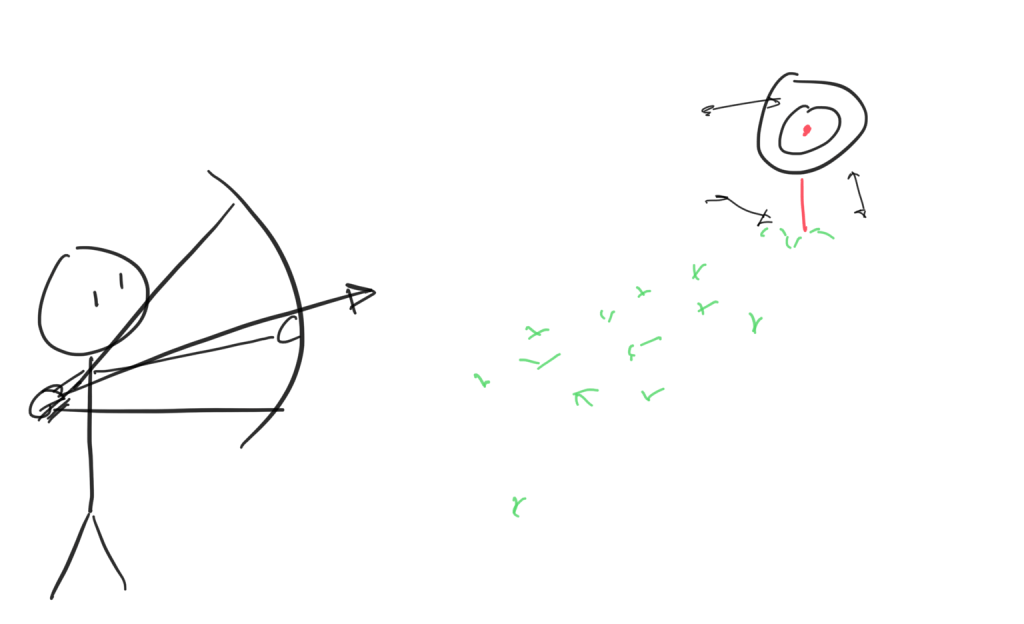
I’m drawn to the word courage in particular. The word literally means ‘heart’, and it takes heart to create. Whether it’s baking a cake for a crush, or starting a business, or writing a poem, or making a slide deck for a sales pitch. When we create, we put ourselves out there. We put our hearts on the line.
The Kelley’s argue that over time many people stop putting themselves on the line. They lose heart, and they lose the creative confidence they had when they were younger. Doubt creeps in. Their work is rejected. Their work is ignored. They’re reminded they’re not part of the ‘creative team’. Gradually they succumb to a host of fears: fear of judgement, fear of making a wrong step, fear of the unknown – that reinforce the root lie: that they’re simply not “creative” after all.
Building creative confidence, therefore, is about responding courageously to these learned fears. It’s about freeing creativity from the stranglehold of inhibition. Giving it a place to flourish, a space to grow.
That being said, it’s easy for this term ‘creative confidence’ to get plump with too many sentimental, ra ra connotations. Before I go on, let me clarify. I don’t think building creative confidence means achieving some fuzzy, inspirational feeling about the work you create. Nor do I think it means mysteriously tapping into some higher power. I think it’s more like a habit, or a muscle you build by trial and practice and patience.
As it turns out I had plenty of fears when I began writing my book. The most prominent, however, was the fear of not finishing. I had heard horror tales of disillusioned writers dragging around unfinished manuscripts for years like a ball and chain. I also knew that as a self-professed ‘ideas guy’ one of my unique challenges would be to see the project through. It’s far easier for me to lunge after a sparkly new idea than to patiently mold and shape and sculpt the one I’ve got.
Either way, when I began, I had only a rough sketch of a story in my mind and a folder stuffed with half-legible notes. I wasn’t brave enough to tell people I was writing a book, let alone a novel. From my point of view it sounded presumptuous to make that claim since I had only written short stories before. I didn’t want to come off as some overly ambitious hack.
So what did I do? I hedged my language. I told people I was writing a “story”. Story was a softer word than book. A story could be short or long. It was sneaky, I admit, sort of like telling people you’re training for a race, but not specifying half marathon, or full, or (cough) turkey trot. But it got me off the hook and covered the fact that I didn’t know what I was doing.
Remarkably, one of the ways you find out what to do is by doing it. Whatever it is. We often assume we need some ideal baseline confidence level before we attempt something, but a counterintuitive discovery I made was that sometimes to build confidence you have to create first.
Learn by doing, as they say.
What this meant was that early on I wrote for quantity more than quality. I wrote and wrote some more. No magic. No potion. I found that the more I put words down, even crap words, words I wasn’t sure of, words I threw out later, the more the story began to emerge. The creativity replenished. The snowball grew.
This is not some silver bullet approach I’m advocating. Others have different approaches. But the point I want to stress is that confidence is a personal affair. The confidence we build (or don’t build) is directly related to the specific fears we address (or don’t address).
I’ll restate this according to the question posed earlier: one reason you should take on a big, scary creative project is to build personal confidence. Period.
For me, I muscled my fear of not finishing by speeding the creative pace early on. Creation yielded confidence. Later, confidence yielded momentum, and momentum yielded the “umph” to get the project in the can.
So how can you apply this?
Begin by naming your fears up front and embracing them earlier in the process. If you’re afraid of sharing, share a little bit as you go. If you’re afraid of criticism, find helpful critics early on. If you’re afraid of the unknown, step into it and keep stepping.
Something good will happen.
 show & tell