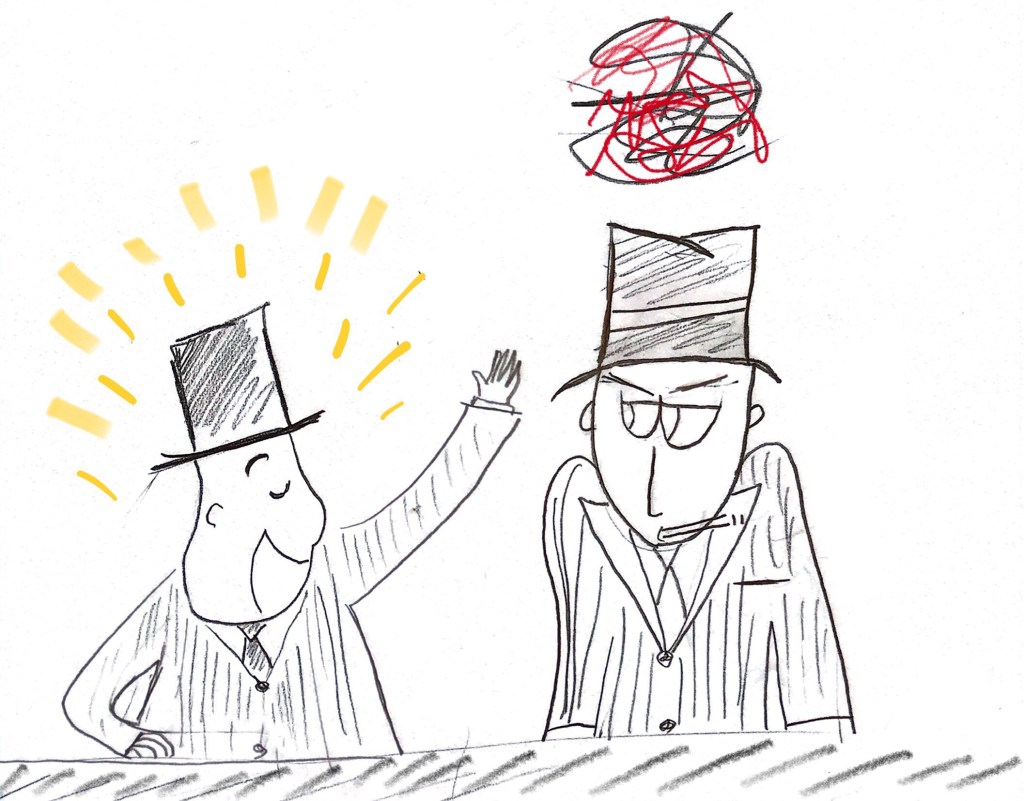
Years ago I made friends with cuddly pessimist — the kind of person who sighs for pleasure and enjoys being enraged and eats happy people for breakfast. Naturally, I delighted in this person. Being myself less disposed to dour visions of the world, I nonetheless found their dourness amusing, even amiable. Whenever we met, it became my innocent game to try and ruffle their pessimist feathers as often as I could — to see if I could slowly and surely drag them over to the dark side; that is, the bright side. Like a sly fox, I would utter blasphemous optimisms and drop outrageous positivities into our conversation, just to see if I could get a rise. I wanted to lure a smile out, even a grudging smile.
Overall, my success was mixed. Most of my attempts earned an eye roll, but I had one statement in my bag of tricks that made my friend want to vomit. When they asked ‘How are you?’, I would respond, with the most deadpan delivery I could muster: ‘Today is the best day of my life.’
Yes — it was that kind of comment; a pronouncement so dripping in sunshine, so flamboyantly happy, so offensively cheerful, it makes not only pessimists, but every Jane and Joe within earshot want to throw a water balloon at whoever just said it. Let me be clear before I say more: It was meant as a joke. I had to hold down laughter to say it with a straight face.
But the irony of the joke is that it often got the better of me. Inexplicably, I began to have great days. I began to feel unusually upbeat. I began to sense that life was here and now — that under its tireless tide of deceptions and disappointments, behind its whirlwinds of scattered opinions, above its clouds of ill omen, and through its sands of slipping time — it was, and IS, a prize waiting to be won, a gift waiting to be unwrapped. It was freaky: the line was coming true.
Now, hold on. This sounds ra-ra, doesn’t it? I hear someone protesting in the back. Am I inferring from this casual observation that my cheesy mantra was the direct cause of the upswing in my days? No. Neither am I suggesting you stand in front of your mirror and blather yourself with happy thoughts. If you do so I will throw a water balloon at you. But I suspect it had something do with it, however trivial, and lately I’ve been trying to uncover what that something was.
I have a clue, though. The clue is priming.
Priming is a term I’ve taken from a book called Presuasion, by Robert Cialdini. The central thesis is that great persuaders prime their audiences. That is, before they lay down their fancy sales smack, and before they unload their arsenal of psychological-loophole-exploiting marketing tactics, they grease the wheel. They get their listener in the right posture to receive their message.
In short, they channel attention well.
One of the core concepts behind priming is called positive confirmation bias: when presented with a statement, we tend to look for confirmations of that statement. For example, if you’re asked on a survey how unhappy are you with your current job, you’ll tend to think of unhappy moments. It’s one way to sniff scammy surveys. It’s also, come to think of it, the same quirky logic behind that old party trick: try not to think of a pink elephant. Once the idea is planted, it lingers.
Overall, I think this describes some of the reasoning behind my one liner. The words, despite their ridiculousness, channeled my attention. Presumably I went through the day looking for confirmations of Best Day Ever.
Still, even if it was only a neat coincidence, there are two things worth emphasizing. Firstly, priming happens at the start. It cracks the door. It explains why beginnings are so crucial to a project — why a story that doesn’t hook you at the start won’t hold you til the end. Persuasion is not merely what you say, but when you say. And secondly, a little goes a long way.
When I began building a table as a wedding gift for my wife, I learned this the hard way. I made the boneheaded mistake of not predrilling the screw holes. I drilled cold. As any decently competent carpenter will tell you, the risk incurred with not predrilling is NOT that the screws won’t screw — it’s that they won’t screw all the way. They come up short. They get stuck. The table wobbles.
This is an apt metaphor. Priming is like building a sturdier table with the screws you’ve got. It’s not a silver bullet. It’s more like aiming before you shoot – it doesn’t mean you’ll hit the target, but it sure betters the odds.
 show & tell