Are you stuck? Fire up the stove.
This past weekend we had another mediocre brunch at a restaurant we’ve been flirting with for months, trying desperately to like, but failing all the same.
The trouble is, it won’t flirt back. I won’t name names, but it’s one of those cool, fresh, fun, Whole Foodsy kind of joints that pins adjectives like biodynamic and hydroponic all over its menus. This is no rookie to the restaurant business. It’s done marvelously well in other cities, but here in Annapolis there’s no love affair yet. It’s still stepping out, blowing kisses to strangers, but doing so very tentatively and I fear unsuccessfully.
The first few times we had a subpar experience we gave it a pass on the grounds that one, maybe Covid threw its mojo off, or two, maybe they’re still shaking off the opening jitters. The third time was meant to be the charm, but it wasn’t and that’s too bad. It’s quickly becoming the kind of place you’re sort of embarrassed to say you made a reservation at, because you really didn’t need to. There are tables here, acres of tables, and any one of them, at any hour, could have your name on it.
Sure it’s under occupied, but that’s not the full story of this slump. There’s something else going on. There’s some mysterious inertia I’ve been trying to put my analytical finger on. You get the sense that everything is moving at half speed inside the big bright white walls – the waiters, the drinks, the food; all of it seems to be traveling in oatmeal. You would think with less people to serve, the service would be snappier. But it’s the opposite. Nothing swamps productivity like a lack of activity. Energy, enthusiasm, zest, cheerfulness all ebb dramatically when there’s nothing to do. The general manager — we have seen him from afar — appears to be a nice fellow, but he too, despite his casual, easy going, lululemon and vans wearing vibe, cannot mask the look of concern for his underperforming establishment.
During certain long, mysterious interludes, when I’ve been twiddling my thumbs waiting for my biodynamic grub to arrive or trying to catch my waiter’s attention, I have watched this benevolent watch tower pace back and forth like an Olympic speed walker, past dozens of empty tables, to pause at the entrance, and consult in a vague authorial way his iPad seating map app, and finally cast a wistful glance through the big street side windows to see if anyone — please, anyone was coming to fill his restaurant.
After our last underwhelming bite I had a small epiphany, which I compared to an experience I had many years ago when my brother and I were lone diners in a hotel restaurant. We were left in dining limbo by a very earnest and very aloof waiter who took our order and poof, disappeared for long nomadic stretches until we genuinely believed he abandoned us altogether.
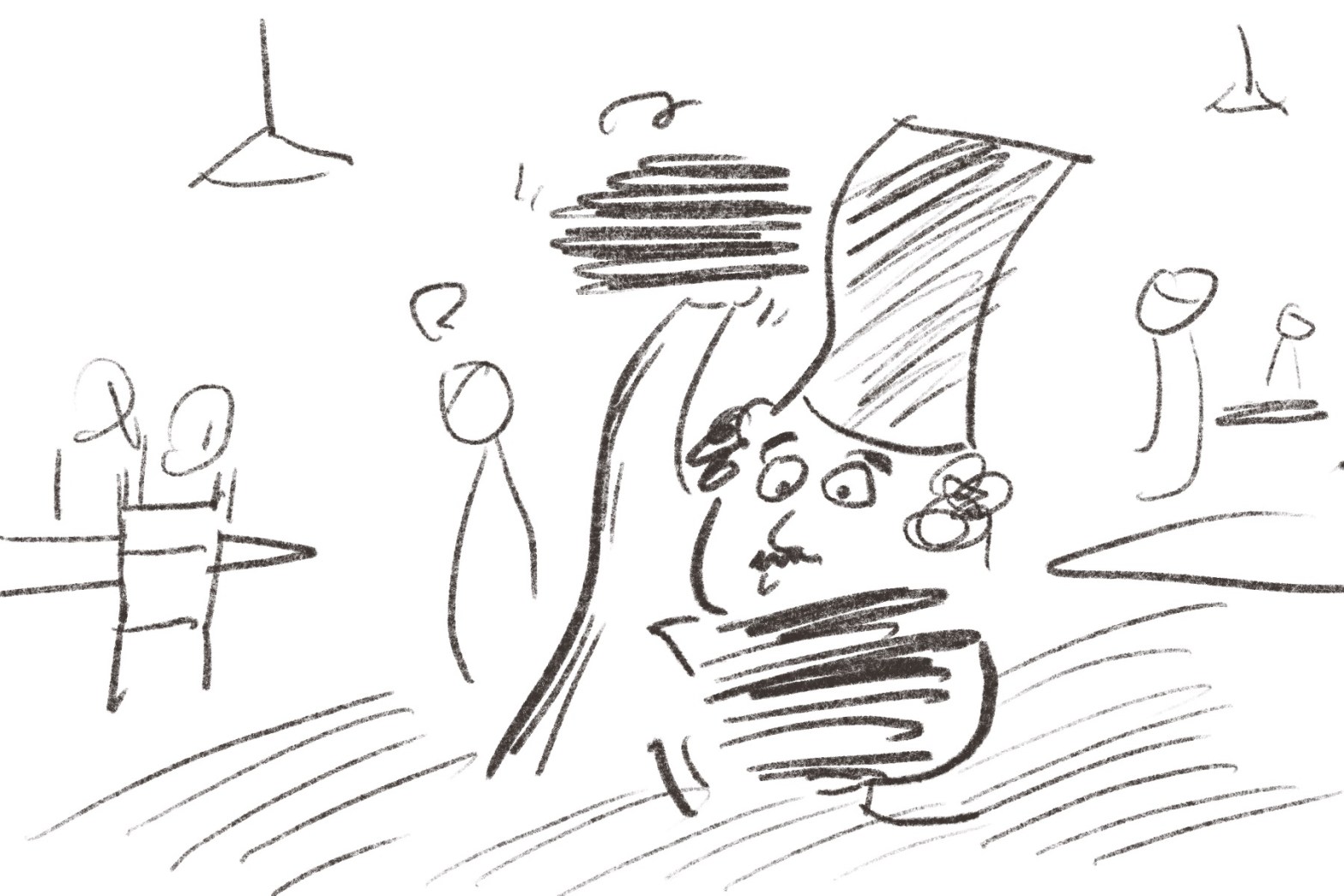
This insight I’m calling the Busy Kitchen Principle — simply: the busier the kitchen, the better the food. It’s a principle that extends beyond restaurants. I have seen it at work in my creative life, and I’ve seen it at work among clients and teams. When people lack challenge, when they lack good wholesome things to do, they loiter. Moods set in. Sluggishness sets in. Resistance gains an upper hand. To put it another way: when kitchens don’t cook, they get cooked.
This is no eulogy for a restaurant. Not yet. I’m far too hopeful for that. If anything it’s a lesson, and a stinging one at that. Sometimes we need a bee in the bonnet, a kindly nudge to start sharpening the knives, get the pots banging and the stove tops burning. Cook for who? Cook for anyone. Cook for no one. Cook for everyone. Chop chop. But get cookin’.
 show & tell